
The biophilia hypothesis is the idea that humans have an innate tendency to seek connection with living systems including plants, animals, landscapes, water, sunlight, and other forms of nature.
The term was popularized by biologist E. O. Wilson in his 1984 book Biophilia. Wilson argued that because human beings evolved for most of their history in close relationship with natural environments, our nervous systems may still be especially responsive to certain natural patterns.
That does not mean every person automatically loves every aspect of nature. It means that, on average, humans may be predisposed to notice and value life-supporting environments.
The evolutionary logic
For early humans, paying attention to nature had practical consequences:
– Water could mean survival.
– Fruit-bearing plants could mean food.
– Animal movement could signal danger or opportunity.
– Open views could make threats easier to detect.
– Trees and sheltered spaces could provide protection.
– Seasonal changes could signal when to move, hunt, or gather.
Over many generations, environments containing cues of safety, resources, and possibility may have become emotionally attractive.
What it looks like today
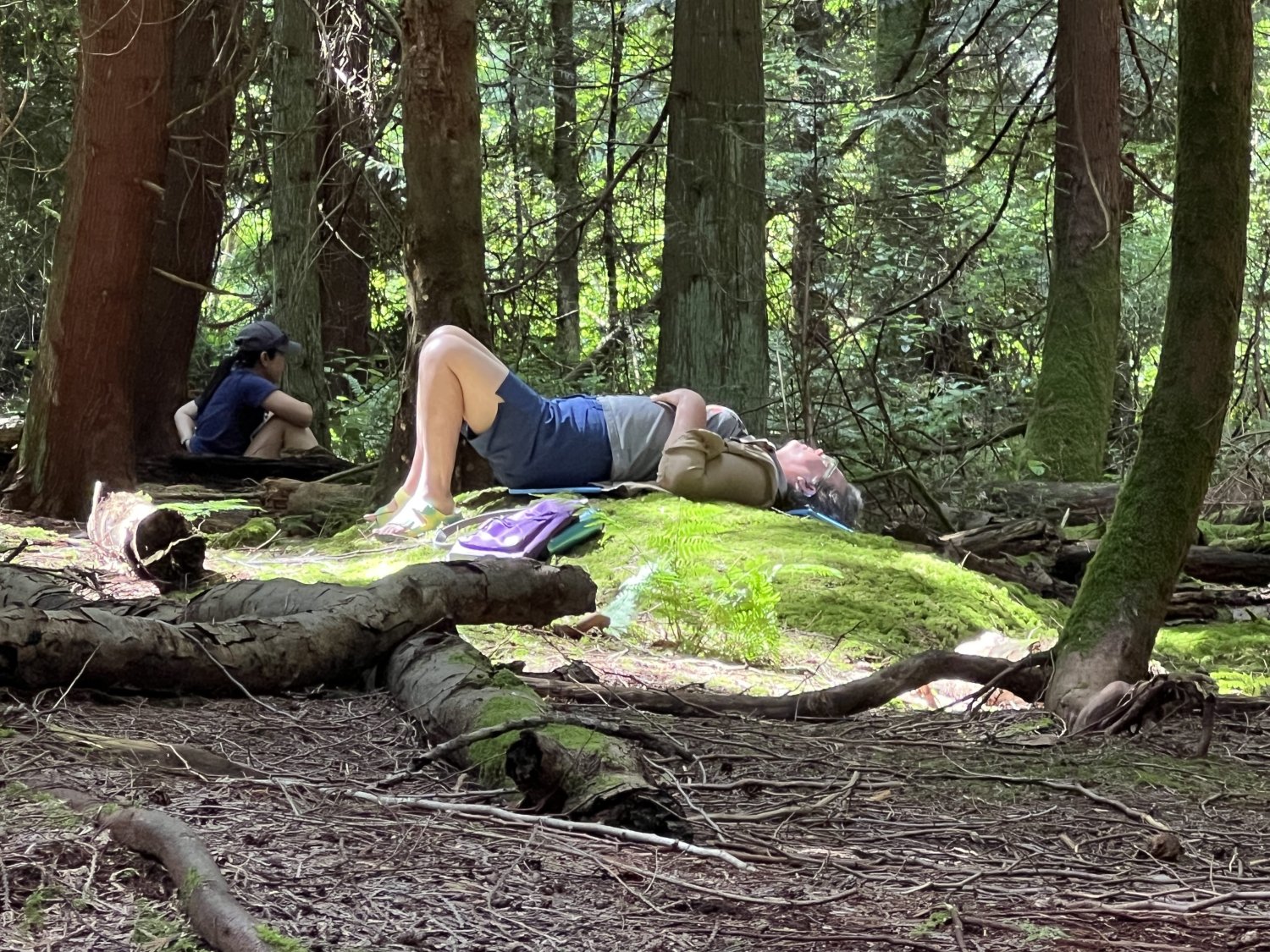
Biophilia may help explain why people often find these experiences calming or compelling:
– Looking at trees or moving water
– Caring for plants
– Watching birds or animals
– Walking in forests
– Seeing daylight and natural materials indoors
– Preferring rooms with windows or views
– Feeling restored by gardens, parks, or coastlines
A related idea is attention restoration theory by Stephen and Rachel Kaplan: natural environments may hold attention in a soft, effortless way, giving directed attention—the effortful kind used for work and problem-solving—a chance to recover.
Another related concept is stress-reduction theory, associated with Roger Ulrich’s work, which proposes that certain natural scenes can produce relatively rapid physiological calming: lower stress, slower heart rate, and easier emotional regulation.
Important caveat
The hypothesis is influential, but it is not a single proven law of human psychology. Researchers debate:
– How much of nature preference is biological versus cultural
– Whether all humans share the same preferences
– Which natural environments are universally appealing
– How much the benefits come from nature itself versus exercise, novelty, social contact, or escape from noise
So the strongest version is not “nature heals everyone in the same way.” A more careful version is:
Humans appear to have recurring, partly evolved tendencies to respond positively to many forms of living nature, and those responses can support attention, mood, and stress regulation under the right conditions.
For a sit spot, biophilia suggests that sitting quietly in one familiar natural place may work partly because it gives the nervous system repeated, low-demand contact with living processes such as light shifting through leaves, birds moving, weather changing, and the body gradually learning that stillness is safe.
Sit. That’s it.